Central Air Conditioner Installation in Sudbury, Ontario done right the first time

Properly sized, code-compliant cooling for Ontario homes

Central Air Conditioner Installation in Sudbury, Ontario is the process of sizing, supplying and commissioning a matched condenser, evaporator coil and air handler so your whole home cools evenly through July and August. We handle everything from load calculations to the ESA electrical permit and TSSA-compliant refrigerant work. If your house still relies on window units or a 20-year-old builder-grade system, a properly designed central air conditioning installation Sudbury homeowners can count on changes how summer feels.

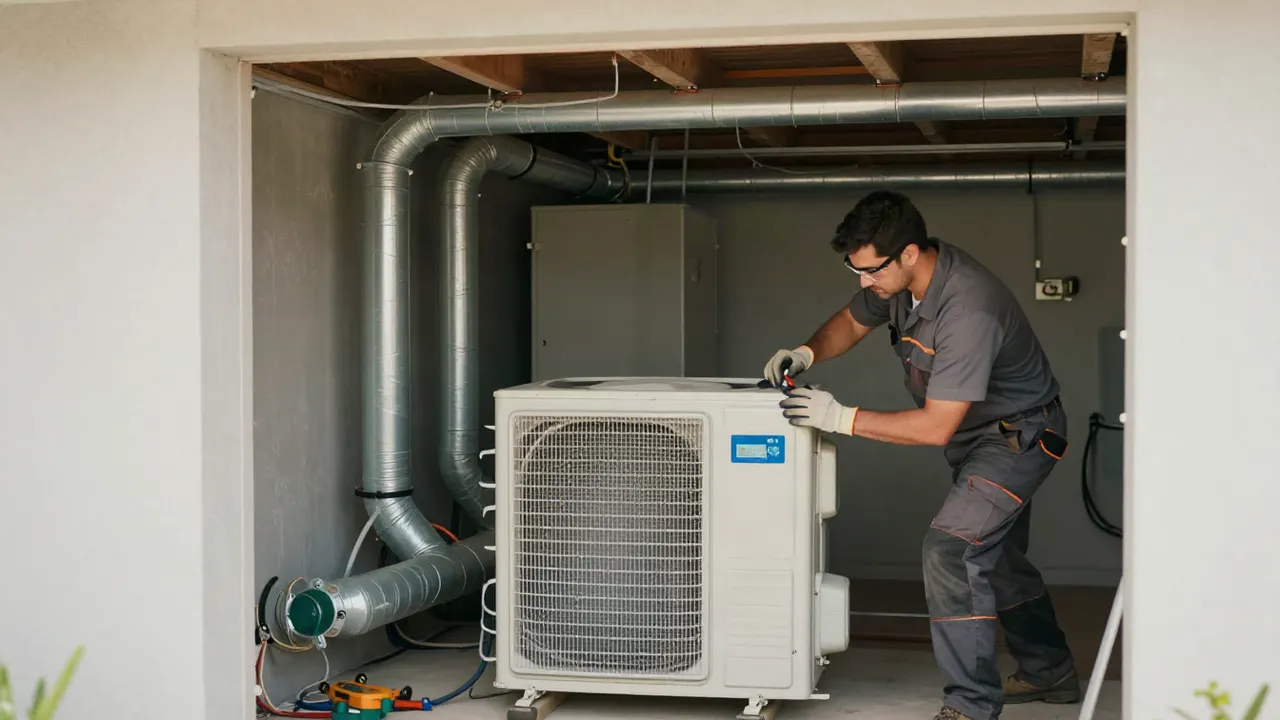
Central Air Conditioner Installation in Sudbury: HVAC technician carefully maneuvering a new air handler unit into position

What Central Air Conditioner Installation in Sudbury, Ontario involves

Central Air Conditioner Installation in Sudbury, Ontario is a mechanical HVAC service that adds or replaces a whole-home cooling system, matching a condenser unit, evaporator coil, air handler and thermostat to your home's actual heat gain. It is needed when a house has no ducted cooling, when an existing unit has failed, or when a system was sized wrong from day one and never kept up. A complete job covers load calculation, equipment selection, copper line sets, condensate drainage, ductwork review and full commissioning.

Sudbury homes deal with short but genuinely hot summers, and the last few seasons have pushed plenty of afternoons past 30 degrees Celsius. Older stock in Minnow Lake and the West End often has undersized ductwork or none at all, while newer builds in the South End may have a coil that was never matched to the furnace. That is why we start every project with a room-by-room load calculation instead of guessing from square footage. If you have been searching for central air conditioner installation Sudbury Ontario near me and getting vague answers, this page explains exactly what the work involves.
Why Sudbury homeowners install central air

A correctly installed central system does more than cool air. It manages humidity, evens out temperatures between floors, and takes pressure off the furnace blower that has been doing double duty. Here is what homeowners notice most in the first cooling season.

Even cooling on every floor

Multi-storey homes in New Sudbury and Valley East commonly run 4 to 6 degrees warmer upstairs than on the main floor. We balance airflow at the plenum and registers so the second storey actually reaches the thermostat setpoint, and we verify it with an anemometer before we pack up.

Lower summer hydro bills

A matched high-efficiency condenser paired with a correctly charged system typically draws 25 to 40 percent less power than a failing 15-year-old unit running on R-410A at low charge. We weigh in the exact refrigerant charge by subcooling and superheat rather than charging by gauge feel.

Quieter operation indoors

Because the condenser sits outside and the air handler moves air through sealed ductwork, you stop hearing window units cycle all night. We also isolate line sets and set condensers on a concrete equipment pad to cut vibration transfer into the wall framing.

Better humidity control

A properly sized system runs long enough cycles to pull moisture out of the air instead of short cycling. That matters in a city surrounded by lakes, where July humidity makes 26 degrees feel like 32. Oversized equipment is the number one cause of a clammy house, and we size to prevent it.

Central Air Conditioner Installation in Sudbury: HVAC technician carefully maneuvering a new air handler unit into position

How our installation process works

Every project follows the same five stages, whether it is a straightforward replacement in Garson or a full new-build rough-in in Val Caron. You will know what is happening on each day and who is on site.

1

In-home assessment

We measure every room, check window orientation, insulation levels and existing duct sizes, and photograph the furnace and electrical panel. This visit takes 60 to 90 minutes and ends with a written load calculation and two or three equipment options at different efficiency tiers.

2

System design and sizing

We run a Manual J style load calculation to land on the correct tonnage, then select a matched condenser, evaporator coil and air handler. Line set routing, condensate drain path and the concrete equipment pad location get planned here so there are no surprises on install day.

3

Permits and scheduling

We pull the ESA electrical permit and confirm TSSA requirements for the refrigerant work. Most installations are booked within 5 to 10 business days, and a standard single-family install takes one full day with our two-technician crew.

4

Installation day

We set the equipment pad and condenser, run and braze the copper line sets under nitrogen, install the evaporator coil and air handler, wire the disconnect, and connect the PVC condensate drain. Floor protection goes down before we start and the work area is cleaned before we leave.

5

Commissioning and walkthrough

We evacuate the line set with a vacuum pump, weigh in the refrigerant charge, then verify static pressure, airflow and temperature split across the coil. You get a walkthrough of the thermostat, filter schedule and warranty paperwork, plus a follow-up check if anything needs adjusting.

Why homeowners choose our Central Air Conditioner Installation in Sudbury, Ontario

Plenty of contractors will quote you a tonnage over the phone. We will not. Here is what separates a properly engineered install from a box swap, and why it matters eight summers from now.

Load calculation on every job

We never size equipment from square footage alone. Every quote includes a room-by-room heat gain calculation, which is how we avoid the oversized systems that cause short cycling, poor dehumidification and premature compressor failure.

Licensed and permitted work

Refrigerant handling in Ontario falls under TSSA and the Environmental Protection Act ODP certification rules, and electrical connections need an ESA permit. We hold the credentials and pull the permits, so your installation passes inspection and your manufacturer warranty stays intact.

Brands we trust and stock

We install Lennox, Carrier, Trane, Goodman, Daikin, Mitsubishi Electric, Bryant, Rheem, York and American Standard equipment, and we match Ecobee and Nest thermostats to the system. That range means we can hit your budget without dropping to equipment we would not put in our own homes.

One-day installs, clean sites

Most single-family central AC unit installation Sudbury projects finish in a single day. We protect floors, haul away the old condenser, and leave you with a tested system, a filter schedule and a phone number that reaches a technician, not a call centre.

What You Get

What our Central Air Conditioner Installation includes

Every installation we quote covers the full scope needed to hand you a working, inspected, warrantied system. Equipment, labour, line sets, drainage, electrical connections and commissioning are all in the price. Ductwork modification and panel upgrades are quoted separately when your home needs them, and we tell you that before you sign anything.

Room-by-room load calculation

We measure every room, check insulation, window area and orientation, and calculate the actual heat gain for your house. This is what determines tonnage, and it is the step most quick-quote contractors skip entirely.

Matched equipment supply

Your condenser, evaporator coil and air handler are selected as a matched set from the same manufacturer line. Mismatched components are a common cause of premature compressor failure and denied warranty claims, so we do not mix and match to save a dollar.

Line sets, drainage and electrical

We run and braze copper line sets under nitrogen, install the PVC condensate drain with proper slope, set the condenser on a concrete pad, and complete the electrical disconnect under an ESA permit. Nothing is left for you to coordinate.

Evacuation and refrigerant charging

After brazing we pull a deep vacuum with a vacuum pump and hold it to confirm there are no leaks, then weigh in the exact refrigerant charge by subcooling and superheat. Charging by gauge pressure alone is guesswork, and it shows up in your hydro bill.

Commissioning and airflow verification

We measure static pressure, airflow at the registers and temperature split across the coil before we call the job done. If a room is running warm, we adjust dampers and balance the system while we are still on site.

Walkthrough and filter schedule

You get a hands-on walkthrough of the thermostat, the filter size and change interval, and the outdoor unit's clearance requirements. We register the warranty and leave the paperwork with you, plus a number to call if anything needs attention.

Solutions

Cooling problems we solve for Sudbury homes

Most calls we get are not really about broken equipment. They are about a system that was never designed for the house it is cooling. Here are the problems we run into most often, and what it takes to fix them properly.

Problem

Upstairs bedrooms that never cool down

You end up running the system all night, sleeping poorly, and still waking up to a second floor that is 5 degrees warmer than the main level.

Solution

We measure airflow at every register and check return air capacity. Usually the fix is rebalancing dampers, adding a return upstairs, or installing zoning so the second floor gets independent control. Sometimes it is simply a system that was oversized and short cycles before cool air reaches the top floor.

Problem

A system that short cycles and never dehumidifies

Short cycling wears out the compressor years early, spikes your hydro bill, and leaves the house feeling cold and damp at the same time.

Solution

This is almost always an oversized unit or a refrigerant charge that is off. We verify the actual load against the installed tonnage, check subcooling and superheat, and correct the charge. If the equipment is genuinely too large, we quote a right-sized replacement rather than patching it.

Problem

Refrigerant leaks and frozen evaporator coils

Ice builds on the coil, airflow drops to almost nothing, and the compressor runs hot. Left alone, a slow leak turns into a compressor failure and a full system replacement.

Solution

We use an electronic leak detector and nitrogen pressure testing to find the leak, repair the joint or coil, replace the filter drier, then evacuate and recharge to the manufacturer's specified weight. If the coil itself is leaking, we replace it with a matched unit.

Problem

Leaky ductwork losing cooled air

Ducts running through an unconditioned attic or crawlspace can lose a quarter of your cooled air before it reaches the room, so the system runs longer and costs more every month.

Solution

We pressure test the duct system, then seal joints and seams with mastic sealant and UL 181 listed tape, and insulate runs in unconditioned space. Most homes see a measurable improvement in how fast rooms reach setpoint after sealing.

Use Cases

When Sudbury homeowners call us

01

A 1960s home in the West End with a forced-air furnace but no existing cooling and tight ceiling space.

Solution

We assess what the existing ductwork can carry, design a layout that fits the structure, and install a ducted split system sized to the actual load. Where ceiling space is too tight for full duct runs, we look at zoning or a hybrid approach.

Outcome

Whole-home cooling without ripping out ceilings, and a system that works with the furnace you already own.

02

A builder-grade condenser in a New Sudbury home has failed after 16 years and the coil is leaking.

Solution

We replace the condenser and matched evaporator coil, flush and pressure test the existing line sets, install a new filter drier, and commission the system the same day. If the line sets are undersized for the new equipment, we replace them.

Outcome

Cooling restored in one day, with a warranty on both parts and labour and a system matched to the house.

03

A two-storey home in the South End where the upstairs runs 6 degrees warmer than the main floor all summer.

Solution

We run a load calculation, check static pressure and register airflow, then install a zoned system with motorized dampers and a second thermostat upstairs. The existing equipment is reused where it is still sound.

Outcome

Independent temperature control on each floor, lower runtimes, and a second storey that finally holds its setpoint.

04

A new build in Val Caron where the homeowner wants cooling designed in before drywall goes up.

Solution

We work at the rough-in stage with the builder to route line sets, place the condenser pad, size the ductwork for cooling airflow, and specify equipment. Everything is inspected before the walls close.

Outcome

A clean installation with no retrofit compromises, and a system that is correctly sized from day one.

Our Approach

Tools and methods we use on every install

Tools & Equipment

Manifold gauge set

Used to read system pressures during evacuation and charging, and to confirm the refrigerant circuit is behaving as the manufacturer specifies before we sign off.

Vacuum pump

Pulls a deep vacuum on the line set after brazing to remove moisture and air. We hold the vacuum to verify there are no leaks before charging.

Refrigerant recovery machine

Recovers refrigerant safely when we remove an old condenser or open a circuit for repair, in line with Ontario's Environmental Protection Act ODP certification requirements.

Nitrogen regulator and brazing torch

We braze copper line sets under a flowing nitrogen purge to prevent internal oxidation, which is what keeps copper flakes out of your metering device and compressor.

Anemometer and manometer

Measure airflow at registers and static pressure in the duct system. These readings tell us whether the blower is moving the volume of air the equipment needs.

Duct blaster

Pressurizes the duct system to measure leakage. We use it before and after sealing so you can see the actual improvement rather than taking our word for it.

Leak detector

Electronic detection finds slow refrigerant leaks that pressure testing alone can miss, so we repair the right joint the first time instead of recharging and hoping.

Methods

Manual J style load calculation

A room-by-room heat gain calculation that accounts for window area, insulation values, ceiling height, orientation and local design temperatures. It produces the tonnage number we design around, and it is the reason our systems hold setpoint on the hottest Sudbury afternoon instead of short cycling.

Nitrogen purge brazing

While brazing copper line sets, we flow nitrogen through the tubing to displace oxygen. Without it, copper oxide forms inside the lines and eventually clogs the metering device or damages the compressor. It is a small step that separates a lasting install from a callback.

Subcooling and superheat charging

Rather than charging until the gauges look right, we weigh refrigerant in and then verify charge by measuring subcooling at the liquid line and superheat at the suction line against the manufacturer's target. This is how a system runs at its rated efficiency.

Duct sealing to UL 181 standards

We seal duct joints with mastic sealant and UL 181 listed tape, then insulate runs through unconditioned space. Sealing to a recognized standard means the work holds up over seasons of expansion and contraction instead of peeling off after one winter.

ESA-permitted electrical connections

The condenser disconnect, feed and control wiring are installed and inspected under an ESA electrical permit. It keeps the installation compliant with the Ontario Electrical Safety Code and protects your insurance coverage.

Local Service

How central air installation runs in Sudbury

Sudbury sits in a climate with real seasonal swing: winters that hit minus 30 and summers that now push past 30 degrees Celsius for stretches in July and August. That range shapes how we install. Equipment has to be rated for cold-weather operation, condensate drains need freeze protection on the exterior run, and the condenser pad has to sit above the frost line so it does not heave. Building stock matters too. Older homes in Copper Cliff and the West End often have ductwork sized for heating only, which means we frequently modify trunks and branches before a cooling coil can be added. Newer subdivisions in the South End and Valley East usually have adequate ducts but builder-grade equipment that was never matched to the house. We also work around the Canadian Shield bedrock that sits close to grade across much of the city, which affects where a condenser pad can go and how line sets get routed. If you have been looking for professional central air conditioning installation in Sudbury Ontario, this is what a properly local job looks like.

Service Areas

Minnow Lake

A mix of older bungalows and post-war homes with limited duct capacity. Load calculations here often come in lower than expected because of mature tree cover shading the roof.

New Sudbury

Larger two-storey homes where the upstairs-versus-downstairs temperature gap is the most common complaint. Zoning and return air upgrades solve most of it.

Valley East

Newer builds and rural-edge properties where line set runs can be longer and condenser placement needs to account for snow accumulation and drift.

Copper Cliff

Older housing stock with original ductwork. We frequently find undersized returns and seal or rebuild them before adding cooling capacity.

South End

Fast-growing subdivision area with homes in the 10 to 20 year range. Many are due for a first replacement, and panel capacity sometimes needs review before adding a condenser circuit.

Local Considerations

Bedrock close to grade across much of the city

Limits where a concrete equipment pad can be excavated and set. We plan condenser placement around it rather than discovering the problem on install day, which keeps the job on schedule.

Deep winter frost and freeze-thaw cycles

Exterior condensate drain runs need freeze protection and proper slope, and the condenser pad must sit above the frost line. Skipping this causes ice damage and water backing into the home in spring.

Short, intense cooling season from June to early September

Systems run hard for a concentrated period rather than year-round. Correct sizing and charge matter more here, because an oversized unit short cycles through its entire life.

Mixed housing stock from century homes to new builds

No single installation template works. We assess ductwork, panel capacity and insulation on every home before quoting, which is why our estimates take longer to produce than a phone quote.

Transformation

Two-storey New Sudbury home, upstairs finally cool

Before

A 2,400 square foot home with a 3-ton builder-grade system. The upstairs bedrooms sat 6 degrees warmer than the main floor all summer, and the family ran a window unit in the master bedroom to sleep.

After

We corrected the return air upstairs, rebalanced the supply dampers, and installed a zoned system with a second thermostat. The second floor now holds within 1 degree of the main floor, and the window unit is gone.

Maintenance & Follow-up

Change the 16x25 filter every 60 to 90 days, keep the condenser clear of leaves and snow, and have the system checked each spring before the cooling season starts.

Before

A 1,100 square foot post-war bungalow with a forced-air furnace and no cooling at all. Three window units ran from June to September, blocking windows and adding roughly $90 a month to the hydro bill.

After

We designed a ducted split system around the existing furnace, modified two branch runs for cooling airflow, and installed a 2-ton high-efficiency condenser. The window units came out, and summer hydro use dropped noticeably.

Maintenance & Follow-up

Rinse the outdoor coil each spring, keep the condensate drain clear, and book an annual tune-up so the charge and airflow stay where they were set on install day.

Before

A 2,800 square foot new build with ductwork roughed in for heating only. The homeowner wanted cooling but the builder had not sized the ducts or planned a condenser location.

After

We worked with the framer at the rough-in stage, upsized the trunk line for cooling airflow, routed line sets and the condensate drain, and placed the pad before landscaping. The system was commissioned before move-in.

Maintenance & Follow-up

Keep the two-inch filter changed every 90 days, leave the manufacturer clearance around the condenser, and schedule the first professional check at the one-year mark.

Frequently Asked Questions

Have questions? We have answers.

Call Us
How much does central air conditioner installation cost in Sudbury Ontario?

Most full installations in Sudbury run $3,800 to $7,500 in 2026, including equipment, labour, line sets, permits and commissioning. A basic 2-ton builder-grade replacement sits near the low end, while a 3.5-ton high-efficiency system with new ductwork modifications and a smart thermostat lands at the top. Homes needing extensive ductwork changes or a second zone add cost on top of that range.

How long does central air conditioning installation take in Sudbury?

A standard single-family installation takes one full day, usually 7 to 9 hours with a two-technician crew. New construction rough-ins and multi-zone systems can run two days. If ductwork needs significant modification or the electrical panel needs work, we schedule that as a separate stage so the cooling install itself still finishes in a day.

What size central air conditioner do I need for my Sudbury home?

Most Sudbury homes between 1,400 and 2,200 square feet land between 2 and 3 tons, but the right number comes from a load calculation, not square footage. Window area, insulation, ceiling height and how much sun the west side gets all shift the result. We measure every room before recommending tonnage, because an oversized unit cools fast and dehumidifies poorly.

Is central air conditioning installation worth it in Sudbury Ontario?

Yes, for most homeowners who plan to stay five years or more. Summer afternoon highs in Sudbury have been climbing, and a ducted system adds resale value while replacing the window units that block sightlines and leak cold air. A correctly sized system also costs less to run than several window units cooling the same square footage.

Trust & Credentials

Credentials and reviews

Certifications

Red Seal Refrigeration and Air Conditioning Mechanic by Red Seal Program (Interprovincial Standards)
NATE Certification by North American Technician Excellence
TSSA Registration by Technical Standards and Safety Authority (Ontario)
HRAI Certification by Heating, Refrigeration and Air Conditioning Institute of Canada
Environmental Protection Act ODP Certification by Ontario Ministry of the Environment, Conservation and Parks

Reviews

Google

Quoted three contractors and these were the only ones who actually measured the house. Load calculation came back at 2.5 tons instead of the 3 tons everyone else guessed. Install was one day, permits were pulled, and the upstairs is finally comfortable. Worth the wait for the assessment.

Google

Replaced a failed condenser in our South End home. They found the old coil was leaking, replaced both, and had cold air running by 4pm. Explained the filter schedule and registered the warranty for us. No upsell, no pressure, just straight answers.

BBB

We had a zoned system installed in Valley East for a two-storey with a hot second floor. They worked with our builder at the rough-in stage and the whole thing passed inspection first time. Two summers in and the upstairs thermostat actually holds its setpoint.

Google

Called about a frozen coil in July and they had a technician out the next morning. Found a slow refrigerant leak, repaired the joint, replaced the filter drier and recharged to spec. Cost less than I expected and the system has run perfectly since.

Related Services

Central AC Replacement

When your existing condenser has failed or is running on R-410A at a charge that no longer holds, replacement is usually cheaper than repeated repairs. We swap the outdoor unit and matched coil, reuse sound line sets where possible, and commission the new system the same day.

Central AC Replacement

High-Efficiency Central AC Installation

Higher SEER2 equipment costs more upfront and less every summer. For Sudbury homes running cooling from June through early September, the efficiency gap between a base model and a high-efficiency condenser often pays back within six to eight seasons, especially on larger homes.

High-Efficiency Central AC Installation

New Construction Central AC Installation

New builds in Val Caron, Garson and Valley East need cooling designed alongside the ductwork, not after drywall. We work with builders and homeowners at the rough-in stage to size equipment, route line sets and place the condenser pad before the landscaping goes in.

New Construction Central AC Installation

Central AC Installation for Older Homes

Homes built before 1970 often have no ductwork, low ceiling space or a furnace that cannot handle the static pressure of a cooling coil. We assess what the existing structure can support and design around it, including ducted options that fit century-home floor plans.

Central AC Installation for Older Homes

Central AC Installation for Home Additions & Renovations

Adding a sunroom, finishing a basement or extending a kitchen changes the load on your existing system. We recalculate the whole house and either extend the current ductwork or add capacity so the new space cools with the rest of the home instead of fighting it.

Central AC Installation for Home Additions & Renovations

Ducted Split System Installation

A ducted split system pairs an outdoor condenser with an indoor air handler connected through your existing ductwork. It is the most common configuration for Sudbury homes with a forced-air furnace, and it lets one thermostat manage heating and cooling year-round.

Ducted Split System Installation

Split-System Central AC Installation

Split systems keep the noisy components outside and the quiet air handler in the basement or utility room. We match the indoor and outdoor units by model so the coil, charge and airflow ratings line up, which is what protects your manufacturer warranty.

Split-System Central AC Installation

Central AC System Design & Sizing

Design comes before equipment. We calculate heat gain room by room, check duct static pressure, and specify tonnage, airflow and refrigerant line sizes. Getting this right is the difference between a system that holds 22 degrees on the hottest day and one that never quite gets there.

Central AC System Design & Sizing

Central AC Installation for Multi-Storey Homes

Heat rises, and two-storey homes in New Sudbury and the South End feel it. We design supply and return layouts that push more air upstairs, and where ductwork cannot be reworked, we recommend zoning so the second floor gets the cooling it needs.

Central AC Installation for Multi-Storey Homes

Zoned Cooling System Installation

Zoning splits your home into two or more independently controlled areas with motorized dampers and separate thermostats. It solves the upstairs-versus-downstairs problem without oversizing equipment, and it cuts running costs by cooling only the rooms you are actually using.

Zoned Cooling System Installation

Ductwork Design

Undersized or badly routed ducts starve a new system no matter how good the equipment is. We design trunk and branch layouts sized to the airflow the system needs, then verify static pressure after installation so the blower is not working against itself.

Ductwork Design

Modification & Sealing

Leaky ducts can lose 20 to 30 percent of your cooled air into the attic or crawlspace. We seal joints with mastic sealant and UL 181 listed tape, insulate runs that pass through unconditioned space, and rebalance registers so every room gets its share.

Modification & Sealing

Air Handler & Evaporator Coil Installation

The evaporator coil and air handler are where the cooling actually happens. We install matched coils, set the correct airflow per ton, and make sure the condensate drain slopes properly to a PVC line that will not back up into your ceiling during a humid July.

Air Handler & Evaporator Coil Installation

Smart Thermostat Installation & Integration

We wire and configure Ecobee and Nest thermostats to your new system, including multi-stage and fan settings, then walk you through scheduling and remote control. Done properly, a smart thermostat trims cooling costs by avoiding long runtimes when nobody is home.

Smart Thermostat Installation & Integration

Central AC Condenser Unit Installation

The condenser needs clearance, level ground and a solid pad to run quietly and reject heat efficiently. We set it on a concrete equipment pad, keep the required clearance from walls and shrubs, and check that the disconnect and electrical feed meet ESA requirements.

Central AC Condenser Unit Installation
Testimonials

What Sudbury homeowners say

Real experiences from customers who chose our Central Air Conditioner Installation services

Our upstairs was unbearable every July and two contractors told us to just add a bigger unit. These guys actually measured the house and found the return air was undersized. They fixed the ductwork, installed a 2.5-ton system, and the second floor now holds the same temperature as the main floor. Install took one day and they cleaned up better than they found it.

Marc L.

Homeowner, Minnow Lake

M

We replaced a 17-year-old condenser that was costing a fortune to run. They walked us through three options without pushing the most expensive one, pulled the ESA permit, and had everything running by mid-afternoon. First hydro bill after the switch was noticeably lower, and the house finally feels dry instead of clammy.

Stephanie R.

Homeowner, South End

S

New build and the builder left us with no cooling at all. They came out, designed the ductwork layout with our framer, and installed a zoned system so the bedrooms upstairs are controlled separately. Two winters later the furnace still runs off the same setup. Straight answers, fair price, no surprises on the invoice.

Dave P.

Homeowner, Valley East

D

Our upstairs was unbearable every July and two contractors told us to just add a bigger unit. These guys actually measured the house and found the return air was undersized. They fixed the ductwork, installed a 2.5-ton system, and the second floor now holds the same temperature as the main floor. Install took one day and they cleaned up better than they found it.

Marc L.

Homeowner, Minnow Lake

M

We replaced a 17-year-old condenser that was costing a fortune to run. They walked us through three options without pushing the most expensive one, pulled the ESA permit, and had everything running by mid-afternoon. First hydro bill after the switch was noticeably lower, and the house finally feels dry instead of clammy.

Stephanie R.

Homeowner, South End

S

Book your Central Air Conditioner Installation in Sudbury, Ontario

We have been installing central cooling in this city since 2018, and every job includes a load calculation, permits and full commissioning. Call 444-333-111 and we will book your in-home assessment, usually within a few business days.